
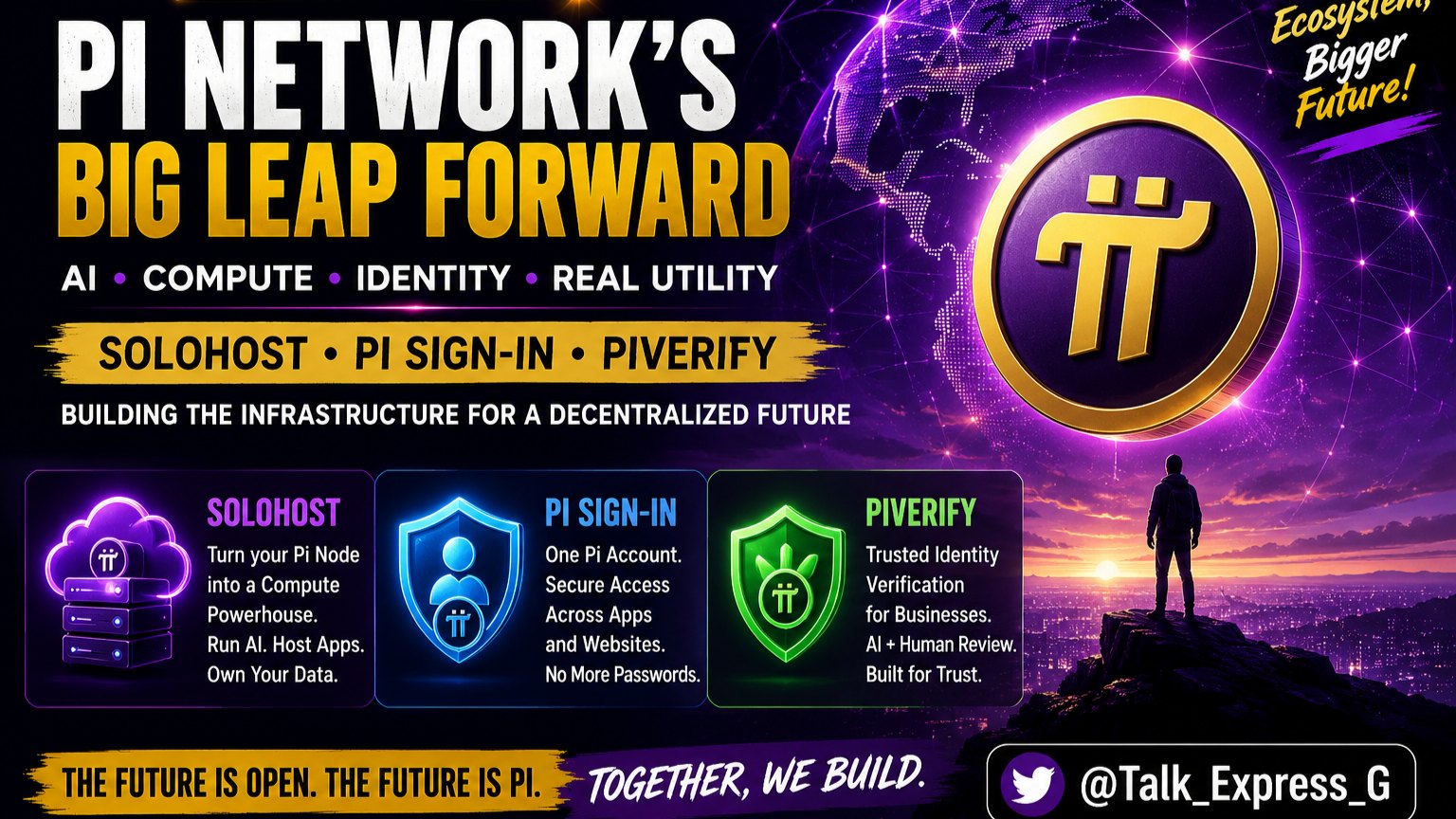
For years, Pi Network has focused on building its blockchain, identity system, and developer ecosystem. This Pi2Day, the Core Team introduced three major products designed to expand Pi's utility beyond its own ecosystem: SoloHost, Pi Sign-in, and PiVerify. Together, these releases aim to make Pi's infrastructure useful not only for Pioneers but also for external developers and businesses.
- SoloHost: Turning Pi Nodes into a Compute Platform
SoloHost is a new platform integrated with Pi Desktop that allows developers to publish self-hosted applications. Users can install and run these applications directly on their own computers, keeping data local and enabling privacy-focused AI workloads. The long-term vision is to let Pi Nodes contribute computing power to a decentralized compute network, opening the door to distributed AI and other resource-intensive applications.
Potential future benefits include:
Running AI applications locally.
Hosting decentralized apps without relying on centralized cloud providers.
A possible future opportunity for node operators to earn by contributing computing resources (this has been discussed as a future direction, not announced as live functionality).
- Pi Sign-in: Extending Pi Beyond the Pi Browser
Pi Sign-in allows users to authenticate with their Pi accounts on supported third-party websites and applications. Instead of creating new usernames and passwords, developers can integrate Pi authentication and benefit from Pi Network's large base of identity-verified users. This extends Pi's presence beyond the Pi Browser into the broader web.
- PiVerify: Identity Verification as a Service
PiVerify packages Pi Network's identity verification capabilities into a service that businesses can use. It combines AI-assisted verification with human review for functions such as document verification, liveness detection, sanctions screening, and duplicate account detection. Businesses using these services are expected to pay for verification, creating another utility for the ecosystem.
Why These Releases Matter
These announcements reflect a strategic shift. Instead of focusing only on internal ecosystem growth, Pi Network is offering its infrastructure—compute, identity, and authentication—to external developers and organizations. If these services gain adoption, they could increase real-world use of Pi's technology beyond simple peer-to-peer transactions.
Challenges Ahead
The new releases have also prompted discussion within the community. Many Pioneers welcomed the focus on infrastructure, while others continue to ask for clearer timelines, broader ecosystem activation, and more visible real-world utility. Building developer tools is one part of the journey; widespread adoption by businesses and users will determine their long-term impact.
Final Thoughts
Pi2Day 2026 was less about exchange listings or token price and more about laying the groundwork for future applications. SoloHost, Pi Sign-in, and PiVerify indicate that Pi Network wants to become more than a blockchain—it aims to become a platform for decentralized computing, digital identity, and AI-enabled services.
Whether this strategy succeeds will depend on how quickly developers, businesses, and the broader community adopt these new capabilities. The technology foundation is expanding; the next challenge is translating that foundation into sustained ecosystem activity and practical utility.