
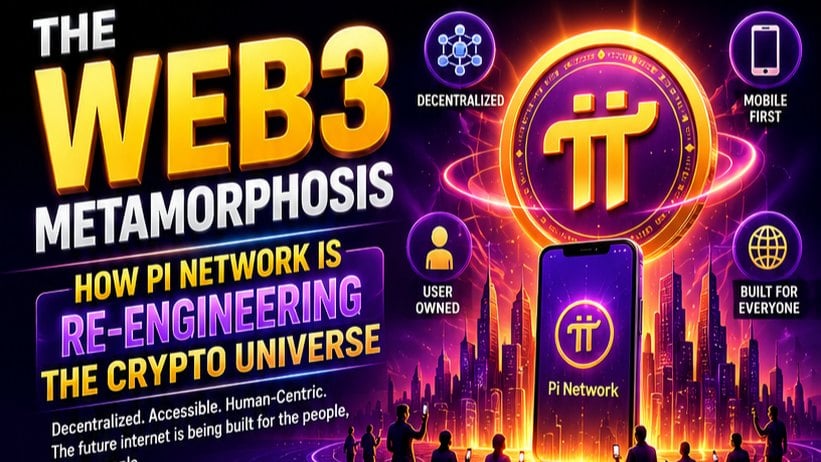
**The Web3 Metamorphosis: How Pi Network is Re-Engineering the Crypto Universe
The digital landscape is undergoing a massive shift, driven by decentralized identity and mobile accessibility. Today, tech ecosystems are moving away from corporate gatekeepers and transitioning toward a user-owned internet. Here is a definitive look at how Web3 architecture, the Pi Network ecosystem, and broader crypto dynamics are converging to reshape our digital interactions.
- The Core Relationship: Web3 and Pi Network
The relationship between Web3 and the Pi Network is symbiotic, structural, and inherently foundational.
The Vision: Web3 is a conceptual architecture for a decentralized, user-owned internet. Pi Network serves as a practical, mass-market implementation of that vision.
The Layer: If Web3 is the overarching operating system of the future internet, Pi Network operates as one of its most widely distributed base layers.
The Access Point: Traditional Web3 infrastructure frequently suffers from high technical barriers, requiring expensive hardware or deep technical literacy. Pi Network bridges this gap by replacing specialized mining rigs with a mobile-first consensus model, making Web3 integration globally accessible.
- The Structural Role of Web3 inside the Pi Network
Web3 principles dictate the entire technological stack, governance, and development roadmap of the Pi Network ecosystem. [ Web3 Architectural Pillars in Pi Network ] │ ┌───────────────────────┼───────────────────────┐ ▼ ▼ ▼ [Infrastructure] [Utility Era] [Identity Proofing] • Global Node Network • Protocol 20 Upgrade • Cryptographic KYC • Desktop/PC Nodes • Smart Contracts • Zero-Knowledge Proofs • Tamper-Proof Ledger • dApps & .pi Domains • Sybil-Attack Shield
Root-Level Decentralization: Pi leverages a massive distributed node system run entirely on community devices like standard laptops and PCs. This eliminates reliance on centralized cloud providers like AWS, keeping the data layer secure and immutable.
Smart Contract Execution: The deployment of Mainnet infrastructure—such as the Protocol 20 upgrade—establishes the foundational environment for smart contracts, decentralized applications (dApps), and non-fungible tokens (NFTs). This shifts the platform from a basic digital ledger into a functional ecosystem.
Verified Identity & Anti-Sybil Framework: Traditional Web3 projects often struggle with anonymous bot networks and market manipulation. Pi incorporates a proprietary, decentralized KYC/KYB mechanism that uses zero-knowledge proofs. This ensures every wallet is tied to a unique human being while strictly maintaining individual data privacy.
Native Ecosystem Utility: Web3 powers the creation of peer-to-peer applications, direct microtransactions, and native web naming conventions like the .pi domain system. Users directly interact with dApps via their digital wallets, removing the middleman entirely.
- How Web3 Changes the Broad Crypto World
Web3 changes the cryptocurrency world by redefining assets from vehicles of pure speculation into functional utilities. Operational Paradigm Traditional Web2 / Early Crypto The Web3 Era Primary Value Driver Asset speculation and market trading. On-chain utility, governance, and ecosystem products. Data Ownership Centralized tech monopolies host and monetize data. Users retain explicit cryptographic ownership of data. Application Ecosystem Siloed apps requiring distinct logins and accounts. Interoperable dApps accessed via a single digital wallet. Incentive Alignment Value flows primarily to corporate platform owners. Value is distributed among network builders and users.
True Decentralized Identity: Instead of managing countless passwords or giving tech giants access via single sign-on buttons, Web3 implements unified digital wallets. Your wallet acts as both your global identity proof and your asset vault across the entire internet landscape.
Autonomous Automation: Smart contracts remove the need for human intermediaries, corporate escrows, or legal clearinghouses. Transactions, agreements, and financial protocols execute automatically based purely on transparent, immutable mathematical code.
The Real Utility Era: Web3 shifts the public perception of blockchain technology. Cryptocurrencies are no longer just numbers on an exchange; they are the fuel powering decentralized storage systems, peer-to-peer computational processing, and democratic governance models (DAOs).
- Summary Matrix: The Complete Web3-Pi Nexus
The Engine (Web3): Decentralized data protocols, programmatic smart contracts, and trustless peer-to-peer verification.
The Vehicle (Pi Network): A mobile-accessible infrastructure, a global footprint spanning over 230 countries, and a verified human user base.
The Ultimate Outcome: A democratized internet model where everyday individuals retain absolute control over their identity, financial transactions, and digital footprints.
Author Profile:
Content curated and analyzed by @hitpaal for @bscn.
Delivering clear, verified, high-density insights across the frontiers of Web3 technology.
If you want to dive deeper, let me know if you would like me to unpack the technical mechanics of the Protocol 20 smart contracts, explain how Pi's mobile consensus protocol functions without consuming battery, or draft promotional social media threads tailored for the @bscn community. **