
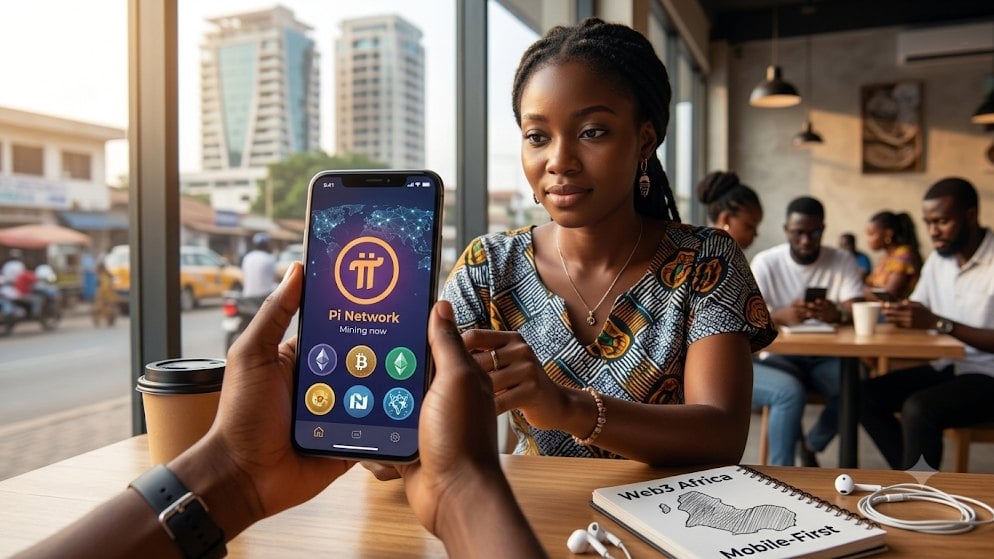
While the West has built its crypto adventure behind desktop screens, with complex browser extensions and security USB keys, Africa has taken a completely different path. For us, Web3 cannot be used on PC. “It can be experienced on a smartphone.” Why does this specificity make our continent the real laboratory for real crypto adoption?
- The big technological leap: from “No-PC” to “Mobile-Only”
In Europe or the United States, the technological transition was linear: the computer first, then the telephone. In Africa, we have simply skipped the stage of the personal computer. For the vast majority of users, their first contact with the internet was through a smartphone screen. This is what we call the ?Mobile-First (or even Mobile-Only) revolution.
The smartphone is not a secondary tool: it is our bank, our work tool and our gateway to the world.It is this same logic which explains why mobile networks like Pi Network, designed from the start to run on mobile without consuming excessive energy, have had such dazzling success there.
-The school of Mobile Money: the perfect ancestor of Crypto Even before the word "Bitcoin" existed, Africa was already using digital currency thanks to Mobile Money (Orange Money, MTN, Wave, M-Pesa...). -Send money with a simple code or an application? **Already done.
- Pay a merchant with their phone? A daily habit.
-Manage a virtual wallet without having a physical bank account? This has been our reality for over ten years.For an African, understanding the concept of a crypto wallet is almost natural, because the mental gymnastics are the same as for Mobile Money. The only difference is that blockchain frees us from excessive fees and borders. Why is this a historic opportunity for African Web3? Because the decentralized applications (dApps) that will succeed here are those that understand this reality. A Web3 project that requires opening a desktop computer to validate a transaction is already out of the game. The future of decentralized finance, payments and commerce in Africa belongs to platforms that integrate seamlessly into a mobile browser. Africa is not just following the Web3 revolution: by imposing its mobile codes, it is forcing developers around the world to simplify their technologies. And you, do you mainly use your phone or your computer for your Web3 activities? Share your habits in the comments!