
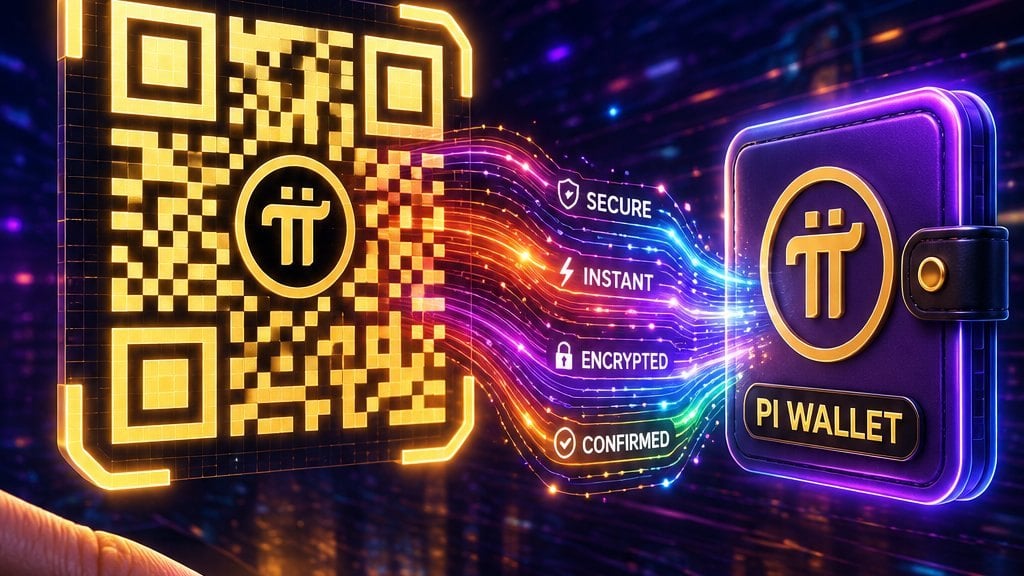
PI WALLET: MOVING TOWARD A BANKING-APP-LIKE EXPERIENCE 🏦📱 The future Pi payment experience will no longer involve complicated manual steps. It will soon approach the speed and convenience of modern banking applications.
🚀 DREAM PAYMENT PROCESS 🔹 Pi Commerce → Select "Pay with Pi" 🔹 Pi Wallet automatically opens (no need to go through Pi Browser) 🔹 Displays details: recipient, amount, fee, notes 🔹 Face ID/fingerprint → Sign transaction → Done! (3-5 seconds)
💡 CORE DIFFERENCE
Unlike centralized banks (sending requests to a server), Pi Wallet uses biometrics to decrypt the Private Key directly on the device. This ensures absolute blockchain security. This is the model that large wallets like Phantom, Trust Wallet, and MetaMask are currently using.
🛠️ 3 POTENTIAL DEVELOPMENT DIRECTIONS
Independent Pi Wallet (Most Feasible): Separate app, secured by Secure Enclave/Android Keystore.
Deep Integration into the Pi App: The wallet becomes a native module, independent of the browser.
Upgraded Pi Browser: Deep integration into the operating system (Less optimized due to browser overload).
🎯 WHY IS OPTION 1 THE MOST REASONABLE?
Looking at PCT's history of separating services (Mining, Browser, KYC, Ads, Sign-In...), making Pi Wallet a "Standalone App" is the most architecturally sound step to building a professional ecosystem.
🔍 NOTABLE SIGN
PCT's mention of "Integration into a phone's native wallet" instead of "Pi Browser" signals they are considering the wallet as a separate component.
If Pi is to become an everyday currency for tens of millions of people, the experience must be as simple as Apple Pay or Google Wallet. This separation is key!